 by Tega Akuruli
The Future of Satellite Internet
The Shift Towards Space-Based Internet
Satellite internet has always been the solution for very remote regions, maritime communication, and disaster recovery. Historically, it was slow, high-latency, and limited in capacity. Over the last decade, though, technological advances with low Earth orbit satellites, laser-based inter-satellite communication, reusable launch systems, and AI-driven network management have completely redefined what satellite internet can achieve.
The next generation of satellite networks will bridge the world in new ways, with unprecedented speed and scale impacting industries as diverse as finance, health care, defense, autonomous transportation, and cloud computing. This is not an incremental change but rather a paradigm shift in how data travels around the world. Satellites of the future are no longer just relays but are instead smart, autonomous nodes within an enormous, decentralized orbital web.
This article explores the untold future of satellite internet in depth, from the perspective of engineering, architecture, technologies, and the societal impact of this emerging infrastructure. The content is crafted to be both technically rich for professionals and readable for non-experts, serving as a comprehensive guide through the next era of global connectivity.
Understanding How Satellite Internet Works
To appreciate the future, it’s important to understand how satellite internet works today. Modern networks are based on the interplay among satellite orbits, signal propagation, and ground infrastructure, including data routing.
Satellite Orbits: GEO, MEO, and LEO
Satellites operate at various altitudes, each with distinct characteristics:
- Geostationary Orbit (GEO): Roughly 35,786 km from the equator, GEO satellites remain fixed relative to the Earth’s surface. They serve vast areas with a high latency of approximately 600 ms, thus being less useful for real-time applications such as online gaming or autonomous systems. Traditionally, GEO satellites have been applied in TV broadcast, weather monitoring, and broadband services.
- Medium Earth Orbit: MEO satellites range from 2,000 to 20,000 kilometers, offering moderate latency of 100–300 ms. They are commonly utilized for navigation systems like GPS. Some modern internet applications use MEO for regional coverage.
- Low Earth Orbit (LEO): At 300–1,500 km distance, the LEO satellites drastically reduce latency to between 20–40 ms, rivaling fiber-based networks. The challenge lies in the fact that these satellites are moving fast around the Earth, which requires continuous handovers and huge constellations of hundreds or thousands of satellites to achieve global coverage.
These orbital mechanics are important to understand, since the future of satellite-based internet is going to rely primarily on dense LEO constellations, with GEO and MEO providing complementary roles.
The Challenges of Satellite Communication
Satellite networks still have to solve several very difficult engineering problems, even with the newest technologies:
- Latency and propagation delays: The distance the signal needs to travel causes unavoidable delays. LEO mitigates this but requires dense networks.
- Bandwidth limitations: Spectrum allocation is finite; therefore, congestion can be experienced during high demand.
- Orbital debris: Thousands of satellites increase the risk of collisions, requiring advanced tracking and collision avoidance systems.
- Signal attenuation: Weather, atmospheric interference, and obstacles can degrade performance.
- Power constraints: Satellites use solar arrays and batteries, so they have limited energy for processing and transmission.
Addressing these challenges forms the basis for innovations in network architecture, satellite hardware, and AI-driven management systems.
The Transformation: Low Earth Orbit Constellations
The real revolution in satellite Internet is that of dense LEO constellations, redefining both coverage and functionality.
How LEO Constellations Work
LEO constellations comprise hundreds to thousands of small satellites in choreographed orbits. While traditional GEO satellites are designed to operate alone as isolated relay stations, LEO satellites are deployed in an interconnected mesh network. This mesh is characterized by:
- Routes traffic dynamically between satellites.
- Shares network load to prevent congestion
- Provides redundancy in case of satellite failures
- Reduces latency by ensuring data travels through the most efficient orbital path.
The Role of Inter-Satellite Links
A breakthrough that has enabled this revolution is laser-based inter-satellite communication. These high-speed optical links enable satellites to:
- Transmit data at gigabit speeds.
- Avoid dependence on ground stations for all traffic.
- Create a global, autonomous network in orbit.
- Reduce latency and increase reliability across continents.
Laser links turn satellites into independent routing nodes, making them essentially flying data centers that route traffic in real time.
Onboard Intelligence: AI in Space Networks
Modern satellites are increasingly equipped with onboard AI processors capable of:
- Autonomous routing optimization
- Predictive load balancing
- Beamforming and signal adjustment
- Collision avoidance and orbit prediction
- Adaptive energy management
This means that satellites are no longer passive devices, but can analyze, optimize, and intelligently forward traffic to make sure that global connectivity remains robust, even in unexpected events or high network demand.
Ground Infrastructure and User Terminals
The development of satellites goes in parallel with the ground technology that must be capable of matching the orbital networks.
Electronically Steered Antennas
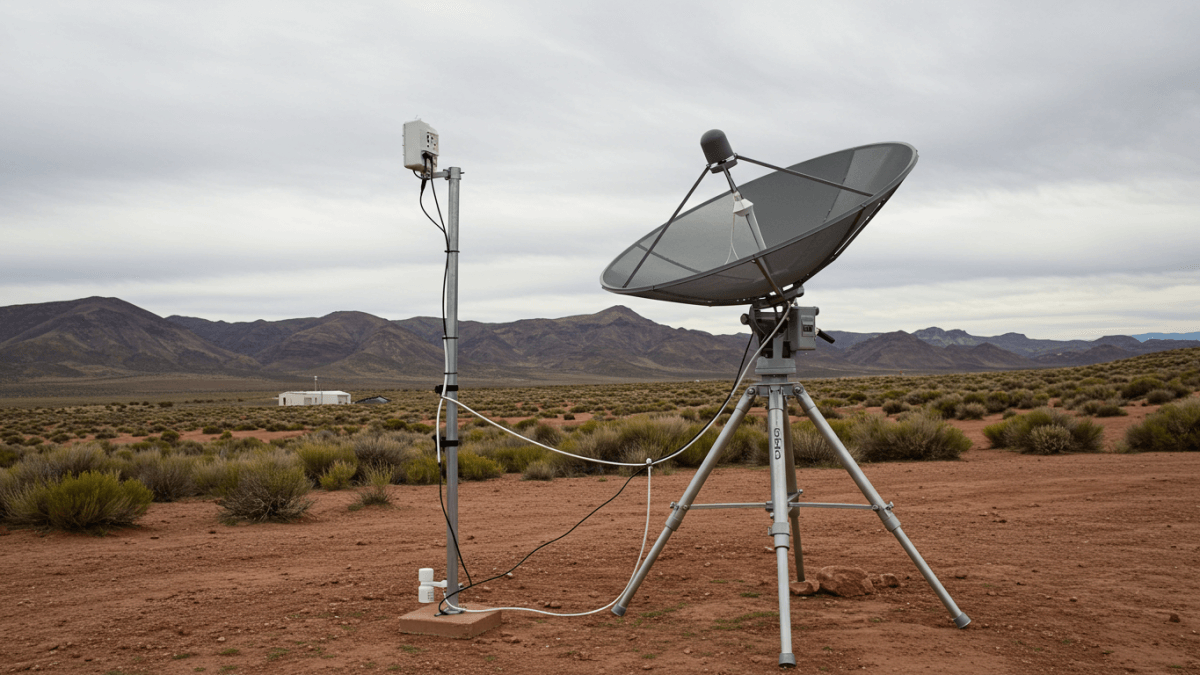
Traditional satellite dishes rely on mechanical movements to orient towards satellites. Next-generation ESAs will utilize phased-array technology to:
- Shift beam direction in milliseconds.
- Track fast-moving LEO satellites without moving parts.
- It provides uninterrupted connectivity for mobile applications like ships, planes, and vehicles.
- Reduce maintenance needs and improve durability.
Multi-Orbit, Multi-Band Terminals
Future user terminals will support:
- Hybrid connectivity across LEO, MEO, and GEO
- Multiple frequency bands, including Ka, Ku, and the upcoming V-band
- Adaptive switching to avoid atmospheric interference
- AI-driven optimization for maximum throughput
These include seamless, high-speed global connectivity in a variety of environments and mobility scenarios.
Power, Sustainability, and Space Logistics
Sustaining thousands of satellites will require innovations in energy and launch technology.
Energy Efficiency in Orbit
Satellites make use of advanced solar arrays, radiation-hardened batteries, and low-power electronics. AI algorithms optimize energy distribution for:
- Beam shaping and transmission
- Onboard processing
- Inter-satellite communication
Efficiency is important because even small savings in energy can prolong the life of satellites and enhance network reliability.
Sustainable Launch Practices
High-density constellations rely on frequent, economical launches. Other innovations include:
- Reusable rockets
- Miniaturised satellites and rideshare launches
- Electric propulsion for orbit adjustments
- Planned deorbiting to avoid accumulation of space debris.
These practices ensure that the expansion of satellite internet is economically viable and environmentally responsible.
The Impact on Networking and Global Communication
Next-generation satellite internet will be completely changing how data travels around the world.
Edge Computing in Space
Satellites will increasingly host edge computing nodes capable of:
- Real-time data processing close to the user
- Caching often-accessed content.
- Performing AI inference for applications in autonomous vehicles and IoT devices
This reduces latency for critical applications and offloads terrestrial infrastructure.
Integration with Terrestrial Networks
Satellite internet complements existing fiber, 5G, and Wi-Fi networks:
- Remote areas get direct high-speed access sans fiber rollout.
- 5G towers can utilize satellite backhaul for redundancy.
- Direct-to-device connectivity allows staying connected in disaster areas or even offshore.
The result is a hybrid global network in which terrestrial and orbital infrastructure operate together seamlessly.
Regulatory, Business, and Societal Implications
The expansion of satellite networks has economic, political, and social implications.
- Global ISPs in space will provide broadband, enterprise connectivity, maritime and aviation services, and government networks.
- Regulation will have to evolve for spectrum allocation, space traffic management, cybersecurity, and international coordination.
- Societal impact includes bridging the digital divide, enabling global remote education and work, and providing resilient connectivity during natural disasters.
Satellite internet isn’t a technological shift but a new model of global digital infrastructure.
Outlook for the Future
The next decade promises:
- Thousands of AI-managed LEO satellites forming autonomous orbital networks.
- Integration with edge computing, AI, and next-generation 5G infrastructure.
- Laser-linked global routing independent of ground infrastructure.
- Improved resiliency, low latency, and near-ubiquitous coverage.
- It has revolutionary implications for education, healthcare, commerce, transportation, and emergency response.
This is the untold future of a planetary-scale, intelligent, resilient network orbiting Earth, connecting everyone, everywhere.