 by Tega Akuruli
Load Balancers: The Invisible Managers of Internet Traffic
The Hidden Role of Load Balancers in Modern Connectivity
From the time it takes for a banking app to check an account balance to a streaming platform delivering high-definition video, or an online store processing thousands of orders, users expect a website or application to load immediately. At the backbone of every seamless experience is a system silently managing massive waves of traffic, prioritizing requests, and preventing overloads.
Beneath this system lies the load balancer: a component that few people ever hear about but on which every major digital platform relies. Load balancers make the decisions on which server handles each request, how to distribute workloads fairly, and how to prevent failures from affecting users.
Without load balancers, even the most powerful servers would not be able to survive sudden traffic increases. Modern internet applications could not exist without them, yet their work goes quietly behind the scenes, unseen yet indispensable.
Why Modern Traffic Patterns Demand Intelligent Distribution
Businesses today operate on global scales. Traffic originating from different countries, devices, and networks, all hitting the same applications but for different reasons. Maybe a registration page receives thousands of new sign-ups after a viral advertisement. Perhaps a news website observes sharp increases in traffic during global events. Maybe a payment gateway sees tightly timed spikes during peak shopping hours of the day.
These patterns are unpredictable, highly dynamic, and often volatile. No single server, or even a small cluster, can handle this diversity efficiently.
This is where the load balancer becomes vital:
- They iron out chaotic traffic into manageable workflows.
- They redirect users to available servers based on real-time load.
- They prevent any one server from becoming a bottleneck.
- They enhance application responsiveness through optimal endpoint selection.
Today’s businesses demand data-driven decisions, personalization, and high-velocity interactions. Load balancers allow all these to scale without the user even knowing it.
How Load Balancers Maintain Application Reliability
Reliability is the currency of the modern digital world. Should an application crash at a peak moment, the cost is immediate: lost revenue, customer frustration, and damaged reputation. Load balancers are the invisible guardians that maintain reliability through several powerful mechanisms.
Failover and High Availability
The load balancer instantly removes any server that goes offline or becomes unhealthy from rotation. Users notice nothing. It automatically means redundancy and, therefore, availability of service even when there is a failure.
Session Persistence
Some applications require that users remain connected to the same server to persist session data, such as shopping carts, login states, or form submissions. Load balancers intelligently manage this persistence while still distributing traffic across multiple servers.
Health Checks and Monitoring
Load balancers are constantly running internal diagnostics:
- Is the server responding on time?
- Is it returning errors?
- Is the response quality degraded?
- Is the resource usage spiking?
It automatically reroutes traffic when a server is performing inadequately.
Graceful Degradation
During crises, load balancers manage the traffic in a manner to avoid total collapse. Instead of failing, they would retain essential features and throttle non-critical functions, keeping the user experience maintained.
This orchestration ensures that businesses stay online under pressure; hence, the load balancers are an operational shield protecting user trust.
Traffic Routing Strategies That Shape User Experience
Load balancing is far more complex than just splitting traffic across a set of nodes. Different server environments require different routing algorithms, each suited for performance, fairness, or reliability.
Core strategies that govern modern distribution include the following:
- Round Robin: Traffic cycles through the servers in sequence. Simple, fair, and effective for balanced clusters of similar capacity.
- Least Connections: Traffic flows to the server with the fewest active connections. Ideal for long-lived sessions or uneven request loads.
- Weighted Distribution: Servers are assigned “weights” according to their capacity; the heavy-duty servers absorb more traffic, the smaller ones take less.
- IP Hash Routing: Users connect to servers based on their IP address. Useful in maintaining session stickiness when sessions cannot move between machines.
- Latency-Based Routing: The balancer chooses the fastest-responding server, which improves the performance for users across the world. This is essential for distributed applications.
- Geo-aware Routing: Users are routed to the servers closest to their physical locations, reducing latency and speeding up the delivery of content.
These strategies determine more than server load; they influence how responsive and reliable an application feels to millions of users worldwide.
Different Types of Load Balancers and Their Strengths
Load balancers can operate at multiple layers of the networking stack, each controlling different behaviors and offering different benefits. Understanding these layers reveals how deeply load balancers shape user experience.
1. Layer 4 Load Balancers (Transport Layer)
These balancers operate at the TCP/UDP level, balancing connections without inspecting actual data.
Strengths:
- Very fast
- Low overhead
- Excellent for high-volume traffic
Ideal for applications where speed and connection handling matter more than content inspection.
2. Layer 7 Load Balancers (Application Layer)
These balancers interpret HTTP/HTTPS traffic and can route based on:
- URL paths
- Cookies
- Headers
- Device type
- API endpoints
Strengths:
- Fine-grained control
- Smart decision-making
- Adaptable to complex app architectures
Layer 7 load balancers are a must-have for any modern APIs, microservices, and web applications.
3. Hardware Load Balancers
Physical appliances are deployed in data centers.
Strengths:
- Unmatched performance
- Strong security features
- Highly reliable for enterprise environments
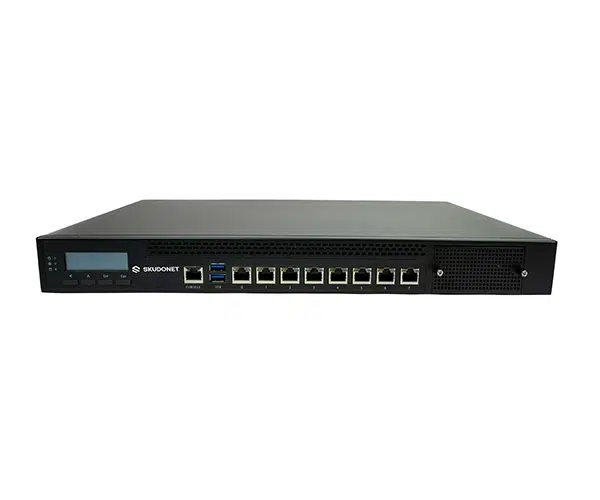
Used by banks, telecommunication companies, and large-scale infrastructure.
4. Software Load Balancers
Flexible and widely adopted in cloud environments.
Strengths:
- Cost-effective
- Scalable
- Easy to integrate
- Developer-friendly
Examples include NGINX, HAProxy, Envoy, and cloud-native balancers.
Each of the types serves a different architectural need, thus enabling the enterprises to design systems that balance speed, control, and resilience.
Load Balancers in Microservices, APIs, and Cloud-Native Systems
Contemporary applications rely on microservices: small, independent units of functionality communicating with each other over networks. This gives flexibility but also multiplies traffic routing complexity.
Load balancers become fundamental because they:
- Route requests between services
- Prevent cascading failures
- Optimize API performance
- Secure communication lines
- Enforce rate limiting
- Balance traffic between containers and pods
Load balancers usually tie the whole cluster together in environments running Kubernetes. They manage inbound traffic, internal service communication, and failover within pods.
Without them, microservices would collapse under their own interdependencies.
Security: The Overlooked Strength of Load Balancers
Load balancers quietly perform several security functions that protect applications against everyday threats.
DDoS Mitigation
They absorb or filter out malicious traffic bursts before they reach servers.
SSL Termination
Load balancers decrypt the traffic at the edge, which reduces the processing burden on the application servers.
Web Application Firewall Integration
Many balancers integrate WAF systems, blocking attacks such as:
- SQL injection
- Cross-site scripting
- Bot traffic
- Malformed payloads
- Traffic Anomaly Detection
Load balancers identify suspicious patterns-unusual request rates, malformed packets, and irregular headers-that provide early warnings.
This makes load balancers not just traffic routers, but frontline defenders.
The Future of Load Balancing: Smarter, Distributed, and Autonomous
The next generation of load balancers is evolving toward intelligence and autonomy as online traffic becomes more global and unpredictable.
- AI-Based Routing: Balancers will predict surges in traffic before they occur and reroute accordingly.
- Self-Healing Networks: Systems will automatically repair routing failures, isolate failing nodes, and rebalance loads without human intervention.
- Edge-Aware Distribution: As edge computing proliferates, load balancers will be routing traffic not only to servers but to geographically distributed endpoints closer to users.
- Multi-Cloud Balancing: Applications will spread traffic across multiple cloud providers for resilience and cost efficiency.
Load balancers won’t just respond to traffic they will orchestrate it proactively, becoming central players in delivering future digital experiences.
The Silent Architecture Behind Every Modern Interaction
Load balancers get no glory, and no user ever thinks about them. Yet everything from opening a website to streaming your favorite movie, to buying something online relies on them. They provide stability, predictability, speed, and fairness in systems that otherwise would collapse under modern traffic demands. They prevent outages, secure communication channels, and support scalable architectures. In all ways, load balancers are the invisible managers of Internet traffic, serving quietly to enable the global digital infrastructure we depend upon every hour of every day.