 by Tega Akuruli
How VFX Shapes Our View of Reality
Understanding VFX and Its Role
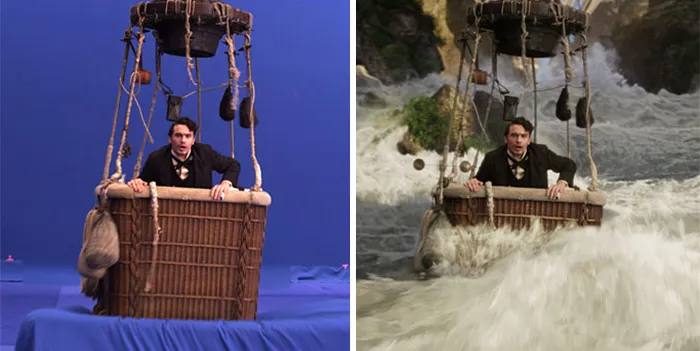
VFX are added digitally to films, television, video games, and media to create imagery that one cannot capture in reality because it would be impossible or highly impractical. Unlike traditional practical effects, VFX uses a great deal of computer-generated imagery (CGI), compositing, and simulation to create immersive visuals.
VFX transforms storytelling, allowing creators to bend reality to show fantastical worlds or recreate historical events with accuracy. Further, it has also been widely used in advertising, education, scientific visualization, and virtual reality experiences.
The core elements of VFX
VFX combines different technical and creative processes:
1. Compositing
Compositing involves layering multiple images or videos together into one single frame. This includes:
- Integration of live-action footage with CGI
- Merging foreground and background elements
- Matching light, color, and perspective
Compositing makes sure that digitally created elements blend in with real-world footage.
2. Computer-Generated Imagery
CGI involves digital asset creation that could include:
- Characters and creatures
- Environments and landscapes
- Particles, fluids, and smoke
CGI enables filmmakers to realize ideas that transcend the realm of physical possibility, from massive cityscapes to alien worlds.
3. Motion Capture
MoCap is the recording of actor and object motions, using a technology that translates this into digital models. This technique allows for:
- Realistic Human Motion for Digital Characters
- Lifelike simulations of animals, creatures, or robots
- Accurate integration of performance and digital environments
Motion capture bridges the gap between real-world performance and virtual creations.
4. Simulation
Simulation algorithms create natural phenomena digitally, including:
- Water, fire, and smoke
- Hair, cloth, and particle effects
- Physics-based interactions between objects
Simulation for VFX adds dynamism and responsiveness, creating a sense of realism and presence.
Applications of VFX
VFX impacts several domains other than just blockbuster movies:
1. Film and Television
Movies and TV shows use VFX for:
- Epic battles, space exploration, and fantasy worlds
- Enhancement of stunts, explosions, and natural disasters
- Aging or de-aging characters digitally
- Recreating historical events in a realistic manner
VFX enables filmmakers to achieve creative freedom while engaging the audience.
2. Video Games
Games use VFX to make the experience immersive:
- Particle effects for explosions or magic
- Environmental conditions such as rain, snow, or fog
- Realistic lighting and reflections
VFX contribute directly to gameplay and telling the story.
3. Advertising and Marketing
Brands rely on VFX to communicate captivating visual stories.
- Animated product demonstrations
- Dynamic visual campaigns
- Interactive and 3D content for digital marketing
VFX helps businesses capture attention and communicate complex ideas visually.
4. Education and Scientific Visualization
VFX enhances learning by:
- Simulating historic events or scientific phenomena
- X-ray visualization of complicated processes, such as molecular or astronomic ones.
- Creation of interactive simulations within VR/AR.
That’s what this use shows: VFX serves purposes beyond mere entertainment; it’s a tool to understand reality itself.
Technical Challenges in VFX
Despite its powerful transformation capability, VFX has many challenges:
1. Computational Demands
High-quality VFX requires extensive computational resources:
- Rendering complex 3D scenes
- Simulating natural phenomena
- Processing multi-layered compositions
Large-scale projects often require rendering farms and cloud computing.
2. Realism vs. Creative Freedom
VFX artists need to balance:
- Accuracy and believability
- Stylization and artistic vision
The point is to keep the audience immersed without losing the storytelling.
3. Workflow Complexity
VFX production involves many teams:
- Modelers and animators
- Compositors and lighting artists
- Simulation engineers and technical directors
Coordinating this workflow requires collaboration, project management, and technical skill.
4. Integration with Live-Action
Merging digital and real-world footage involves :
- Matching lighting, shadows, and camera angles
- Synchronizing motion and timing
- Eliminate visual artifacts.
Seamless integration is critical for the maintenance of audience suspension of disbelief.
How VFX Shapes Perception
VFX influences how an audience perceives and interprets reality:
- Historical reconstructions: Bringing the past into visual reach
- Science fiction and fantasy: Stretching imagination and conceptual knowledge
- Environmental visualization: Showing scenarios such as climate change or natural disasters
By marrying the real with the imaginary, VFX not only entertains but also educates, inspires, and influences perception about the world.
The Future of VFX
The future of VFX promises even more innovation:
- Real-time Rendering: Games and virtual production are increasingly using real-time VFX pipelines.
- AI-Assisted Effects: Machine learning algorithms optimize simulations, automate rotoscoping, and enhance realism.
- Virtual and Augmented Reality: VFX will drive immersive experiences beyond traditional screens.
- Procedural Generation: Algorithmically creating complex and dynamic worlds reduces production time and increases scale.
VFX will continue to shape both entertainment and our understanding of reality in ways previously unimaginable.
To Sum It Up…
Visual effects are much more than cinematic spectacles; they are tools that reshape our perception of reality and visualization of the impossible and continue to improve storytelling. The fusion of technology, art, and physics in VFX enables immersive experiences across film, games, education, and scientific visualization. Behind each stunning scene, the silent toil of hours of technical skill, creativity, and computation makes VFX one of the most powerful yet underappreciated forces in modern media.