 by Tega Akuruli
Why Procedural Graphics Are Taking Over Entertainment
Understanding Procedural Graphics
Procedural graphics are images or visual effects that are algorithmically rather than manually created. Instead of designing every detail by hand, developers and artists define rules, parameters, and formulas, and the system generates visuals on its own.
The reasons this has become a popular method in entertainment are that it enables creators to create huge, complicated, and dynamic environments without the need for crafting every asset by hand. Procedural graphics merge computer science, mathematics, and artistic vision; thus, they are a bridge between engineering and creativity.
Traditional graphics rely on pre-authored assets, such as images, textures, or hand-modeled models. Procedural graphics are generated on the fly and often produce more immersive, scalable, and responsive results to user interaction.
Core Advantages of Procedural Graphics
Procedural generation offers several advantages, most of which lie in the field of entertainment:
1. Infinite Variation
By changing parameters, procedural systems can generate endless variations of:
- Landscapes
- Textures
- Buildings
- Characters
- Special effects
This is impossible to achieve manually at scale, and makes games and simulations feel unique every time.
2. Less Manual Labour
Designers now create rulesets or algorithms instead of churning out thousands of assets. The system itself generates mass production, hence less workload with high visual quality.
3. Dynamic Interactivity
Procedural systems can respond to:
- Player actions
- Environmental conditions
- Random seeds
This can allow for dynamic worlds in games, adaptive effects in movies, and greater immersion.
4. Scalability Across Platforms
Because assets are generated algorithmically, procedural graphics can be scaled to:
- High-resolution cinematic scenes
- Real-time game engines
- VR and AR applications
Without having to provide the design in various resolutions and formats.
Applications in Modern Entertainment
Procedural graphics are everywhere, from computer games and films to interactive experiences.
1. Video Games
Games like Minecraft, No Man’s Sky, and Elite Dangerous rely on procedural generation to craft substantial, explorable worlds. Algorithms populate the landscape, generate terrain, place flora and fauna, and even define ecosystems on the fly.
This allows billions of unique environments without storing every detail as an asset, saving storage and computation while enhancing replayability.
2. Film and Animation
Procedural tools in Hollywood productions are used for:
- Simulating natural phenomena (rain, fire, smoke)
- Crowd scene generation
- Creating complex cityscapes or alien worlds
Software like Houdini enables the artist to define procedural rules while keeping control of the visual style, merging automation with artistic intent.
3. VFX and Motion Graphics
Procedural techniques let motion graphics designers create abstract animations, particle effects, and dynamic patterns programmatically. In other words, artists can generate complicated effects that take weeks to animate by hand.
4. Virtual Reality and AR
Procedural environments can act interactively with a user’s actions in real time, making immersive worlds feel truly alive without needing designers to pre-build every detail.
5. Scientific Visualization
Besides entertaining audiences, procedural graphics model natural systems, simulate flow, or visualize astronomical phenomena, really showcasing the dynamic visual landscapes made possible by the algorithmic process.
The Technical Backbone of Procedural Graphics
Procedural graphics depend on a mixture of:
- Algorithms: Shapes, noise patterns, and transformations are defined through mathematical formulas.
- Randomization: Controlled randomness guarantees variation within set boundaries of the design.
- Rulesets: Constraints to guide generation to maintain the visuals realistic or stylized.
- Simulation: Physics and environment rules that guarantee logical, natural behavior.
- Shaders and Rendering Pipelines: Convert algorithmic data into visible pixels efficiently.
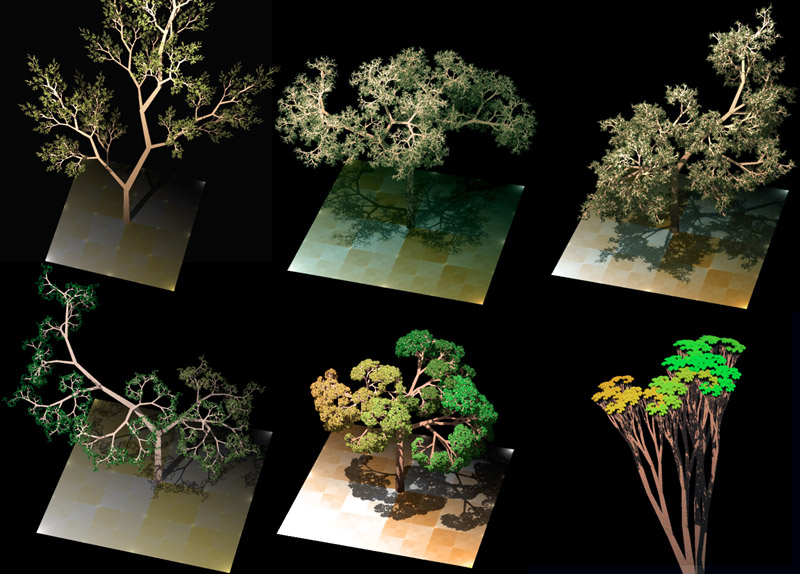
The algorithm Perlin noise generates textures and terrains that look natural; fractal geometry generates mountains, clouds, or plants with realistic recursive detail; particle systems simulate fire, smoke, or magic dynamically.
Why Procedural Graphics Are Revolutionizing Entertainment
Procedural graphics disrupt traditional workflows:
- Efficiency: Automation reduces repetitive work.
- Creativity: Artists focus on rules and style, rather than micromanaging assets.
- Replayability: Dynamic worlds provide new experiences for players and audiences alike.
- Resource Optimization: It reduces the amount of storage needed and decreases memory usage.
- Innovation Potential: Allows simulations, real-time effects, and generative art not previously possible.
Procedural generation lets smaller teams achieve large-scale production value and democratizes the creation of high-quality content.
Challenges and Considerations
While powerful, procedural graphics are not without challenges:
- Complexity of Algorithms: Convincing results are generally achieved with deep mathematical, physical, and programming knowledge.
- Lack of Artistic Control: Wholly procedural outputs will often still require tweaking to attain a certain artistic vision.
- Performance Costs: Real-time procedural generation can be very CPU/GPU-intensive.
- Problematic Debugging: Small changes in parameters may result in different outputs, as it requires scrutiny.
Effective procedural workflows need a balance of automation and manual oversight.
The Future of Procedural Graphics in Entertainment
The next ten years promise even further integration of procedural techniques:
- AI-Assisted Procedural Generation: Combining machine learning with algorithms to generate realistic worlds, textures, and characters.
- Adaptive Storytelling: Procedural narrative elements that respond to the player’s decisions or audience interaction.
- Hyper-Realistic Simulations: Real-time procedural weather, crowds, and natural phenomena in games and VR.
- Generative Art and Design: Procedural tools expanding creative possibilities for artists and animators.
Procedural graphics will continue to push the boundaries of scale, interactivity, and realism, making digital worlds more immersive than ever.
Procedural graphics are silently revolutionizing entertainment. They make infinite worlds, dynamic effects, and scalable visual assets across games, movies, VR/AR, and beyond. Traditional design is important, yet procedural generation gives artists unprecedented powers to achieve scales and realism that would be utterly impossible with traditional manual methods. And as technology evolves, procedural graphics will continue to play a core role in next-generation entertainment.